Restaurant and Commercial Kitchen Cleaning: Protecting Your Hygiene Standards
· 6 min read
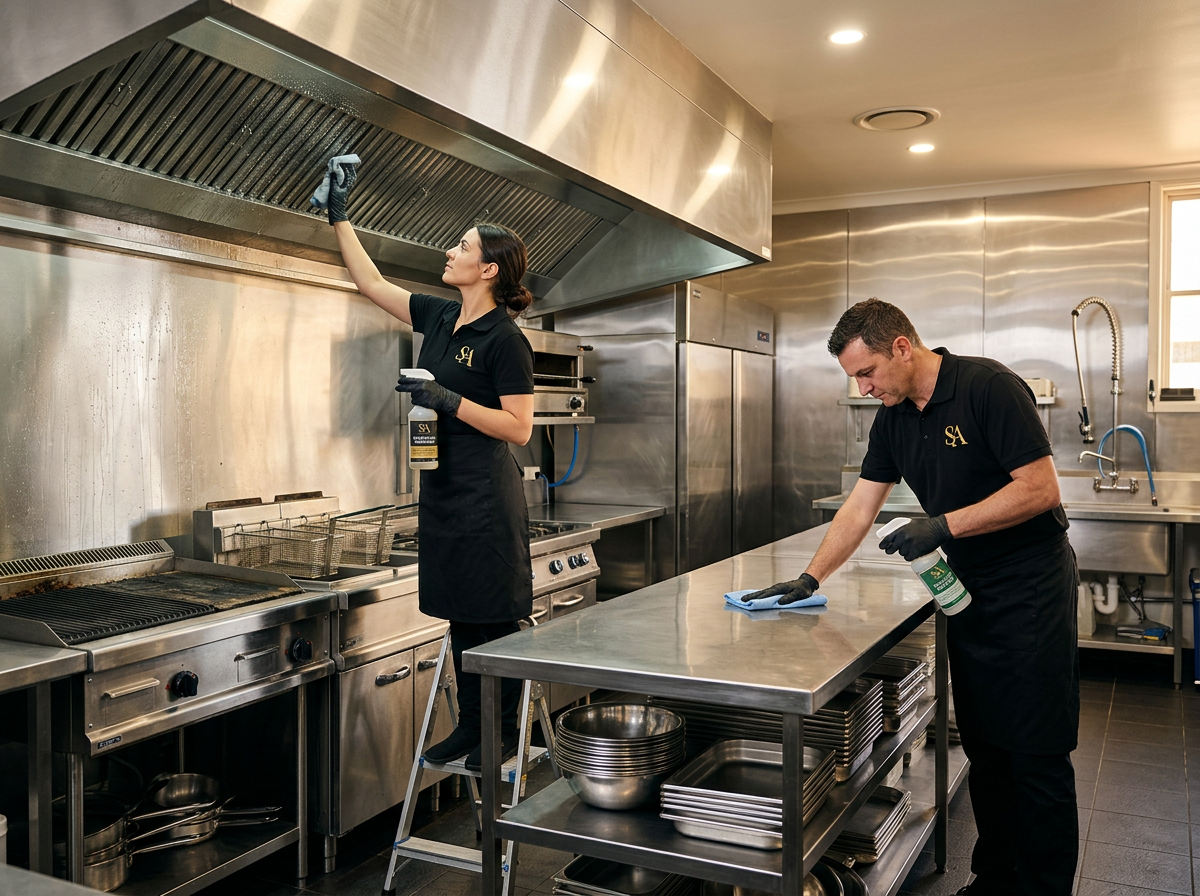
A guide to restaurant and commercial kitchen cleaning in the UK, from daily routines to deep cleans that support food hygiene inspections.
Why kitchen hygiene is non-negotiable
Food businesses are inspected by their local authority. In Scotland, results are published under the Food Hygiene Information Scheme, while England, Wales and Northern Ireland use the Food Hygiene Rating Scheme. Cleanliness of premises and equipment is a key part of every inspection.
Beyond inspections, a clean kitchen protects customers, reduces pest risk and makes the working environment safer for staff.
Daily cleaning versus deep cleaning
Kitchen staff handle clean-as-you-go tasks during service. A professional deep clean goes further, reaching areas that are difficult to clean during normal operations.
- Degreasing behind and beneath cooking equipment
- Cleaning extraction canopies and filters
- Descaling and sanitising sinks, walls and tiled surfaces
- Cleaning cold rooms, fridges and storage areas
- Front-of-house dining areas and customer washrooms
How often should a kitchen be deep cleaned?
Frequency depends on your menu, cooking methods and volume. Many busy restaurants schedule a deep clean monthly or quarterly, with additional cleans before inspections or after refurbishments. Deep cleans are usually carried out overnight or on closed days.
Choosing a kitchen cleaning provider
Look for a provider that uses food-safe products, works to a documented checklist and can work outside service hours. Ask for a site survey so the quotation reflects the size and condition of your kitchen.